I’m really thankful for Taylor and the team for everything they did for me. This process wasn’t easy, but Taylor was always patient, kind, and made sure I understood what was going on. I never felt rushed or ignored, and that honestly meant a lot to me. I truly appreciate the care and effort that went into my case. I would definitely recommend them every time.
Illinois Employment Discrimination
Illinois protects workers from discrimination under some of the broadest civil rights laws in the country. If you’re facing discrimination at work, we can help you understand your rights under the Illinois Human Rights Act and hold your employer accountable.
Get free case review
What is the Illinois Human Rights Act?
The Illinois Human Rights Act (IHRA) is the state’s primary anti-discrimination law. It prohibits employment discrimination based on race, sex, age, disability, religion, national origin, sexual orientation, gender identity, marital status, military status, and more. It protects more characteristics than federal law and, as of recent amendments, applies to employers of nearly every size.
What Illinois law adds beyond federal law

Broader protected classes
The IHRA protects characteristics federal law doesn’t, including marital status, order of protection status, arrest record, citizenship status, and (for many purposes) work authorization status.
Covers nearly every employer
Federal thresholds (15 employees for Title VII, 20 for the ADEA) leave many small-business workers unprotected. Illinois amended the IHRA to cover employers with one or more employees, dramatically expanding who’s protected.
Its own agency and process
Claims go through the Illinois Department of Human Rights and can proceed to the Illinois Human Rights Commission or state court.
Evolving protections
Illinois has repeatedly expanded worker protections in recent years, including around salary history, criminal history, and workplace transparency.
Who the IHRA protects
The Illinois Human Rights Act protects workers from discrimination based on
-
Race, color, national origin
-
Sex, gender identity
-
Pregnancy
-
Age
-
Disability
-
Religion and creed
-
Sexual orientation
-
Marital status
-
Military/veteran status
-
Arrest record and certain criminal history
-
Order of protection status
-
Citizenship / work authorization status
Filing a discrimination claim
in Illinois
In Illinois, discrimination claims generally go through the Illinois Department of Human Rights (IDHR). For claims also covered by federal law, you can file with the Equal Employment Opportunity Commission (EEOC), and a work-sharing agreement between the agencies can preserve your rights under both.
Key points
-
01
A charge with the IDHR generally must be filed within 300 days of the discriminatory act (Illinois extended this deadline from the previous 180 days).
-
02
After the IDHR investigates, you may be able to proceed before the Illinois Human Rights Commission or in state court.
-
03
The process and deadlines differ depending on whether you pursue a state or federal claim.
Talk to us early so you don’t lose the right to act.
The deadlines are strict and they depend on which law you use.
Get free case reviewUnder the IHRA, a successful case can recover:
- Back pay for lost wages and benefits
- Front pay for future earnings
- Compensation for emotional distress
- Reinstatement or the opportunity you were denied
- Punitive damages in certain cases
- Attorney’s fees and costs
Every case is different. What you can recover depends on the facts, the law, and the employer’s conduct.

How we handle
discrimination cases
Every case starts with a free call. We know Illinois employment law — the IHRA, the Department of Human Rights, the deadlines, and how these cases actually play out here. If you have a case, we’ll tell you what it looks like. If you don’t, we’ll tell you that too, and point you toward someone who can help.
On contingency, you pay nothing unless we win.
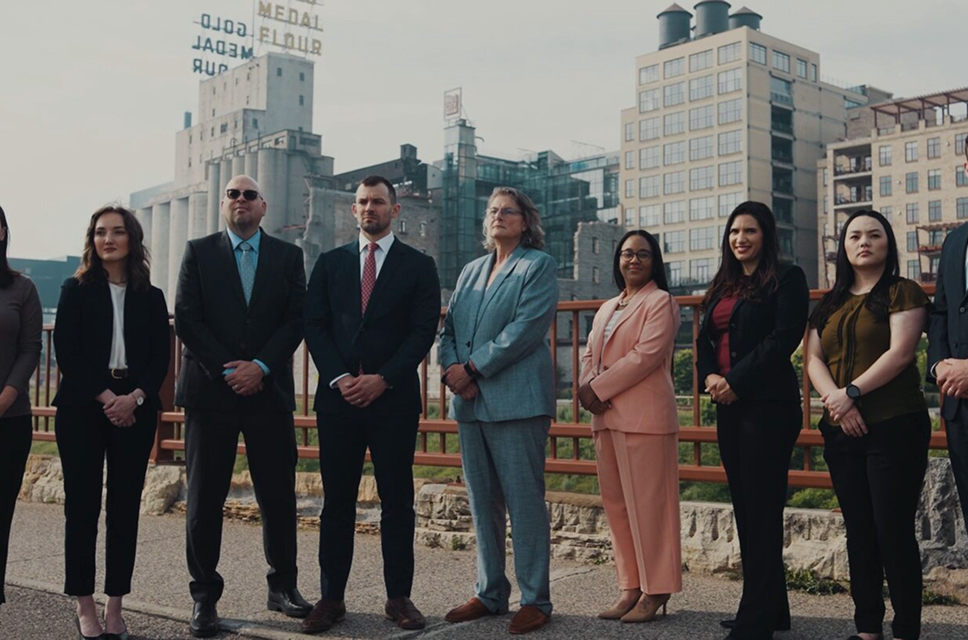
Attorneys who handle these cases
Meet the full team
Shawn Wanta
Founding Partner
Recognized among the nation’s Top 100 Civil Plaintiff and Top 10 Wage and Hour attorneys, a determined litigator fighting for workers in class and collective actions.
Admitted in MN · IL

Joni Thome
Founding Partner
Drawing on 25 years of representing professionals and managers, a steady advocate for employees facing discrimination, harassment, and retaliation in the workplace.
Admitted in MN

Suzanne Heywood
Attorney
Driven by her own encounters with corporate unfairness, a tenacious champion focused on protecting the rights, livelihoods, and futures of hardworking professionals.
Admitted in IN · IL · MI

Luke Molvarec
Attorney
Forged by his background as a Marine, an unwavering defender fighting to level the playing field and secure meaningful financial recovery for unfairly treated workers.
Admitted in IL
I’m incredibly grateful for the time and care that Taylor Volkman has given me. From the very beginning, he took the time to really listen to my situation and understand the details of what I’ve already tried on my own. He provided me with a clear list of possible paths forward and even gave me the vocabulary I can use when addressing issues with my employer. What stood out most is how patient and thorough he has been — making sure I understood my options, validating the steps I’ve already taken, and helping me feel prepared to advocate for myself. He never rushed me, and it was clear that his priority was making sure I felt supported and informed. Even though he hasn’t charged me for the time he has spent so far, the guidance has been invaluable. I strongly recommend Taylor to anyone who needs thoughtful, practical, and compassionate legal support.
I don’t even know where to start. I have nothing but good things to say about Wanta Thome ESPECIALLY about Joni and Thomas! They went to bat for me like no other. They made me feel comfortable and treated me with the respect I deserved. They fought hard for me and helped guide me through each process. I was confident that they had my best interest at heart. After we were done I didn’t want to leave them. They are now my new family members (not sure if they know it or not). All in all, go with Wanta Thome, they’re no suckers! 10’s across the board.
Common questions about discrimination in Illinois
-
How is the Illinois Human Rights Act different from federal law?
The IHRA protects more characteristics (like arrest record, citizenship status, and order of protection status), and recent amendments extended coverage to employers with just one employee. It has its own agency, the Illinois Department of Human Rights, and its own process.
-
How long do I have to file a discrimination claim in Illinois?
Generally 300 days from the discriminatory act for an IHRA charge — Illinois extended this from the previous 180-day window. Because deadlines vary when federal and state claims overlap, it’s best to talk to someone quickly.
-
Do I file with the state or the EEOC?
You can file with the Illinois Department of Human Rights or the EEOC. A work-sharing agreement often preserves your rights under both. Which is better depends on your specific claims, and we help you decide.
-
Does the IHRA cover small employers?
Yes. Illinois amended the IHRA to cover employers with one or more employees, so many small-business workers are now protected under state law when they wouldn’t be under federal law’s 15-employee threshold.
-
What damages can I recover under Illinois law?
The IHRA allows back pay, front pay, emotional distress damages, reinstatement, attorney’s fees, and punitive damages in certain cases. What’s available depends on the specific facts of your case.
Ready to find out where you stand?
Five fields, no story needed yet — that comes on the follow-up call. Most people hear back within five minutes if Nina is enabled, or the same business day if not.
Your submission is confidential. We do not contact your employer.
Common questions
Do I need an Illinois lawyer if I work in Illinois but my employer is based elsewhere?
Usually what matters is where you worked, not where the company is headquartered. If you worked in Illinois, Illinois law often applies even if your employer is based in another state. We help sort out which state’s law governs your situation.
Can I bring both a state and a federal discrimination claim?
Often, yes. Many situations violate both the Illinois Human Rights Act and federal law, and you can pursue claims under both. Because each has different deadlines, damages, and procedures, we help you decide which combination gives you the strongest case.
What if I’m not sure whether what happened counts as discrimination?
That’s normal, and it’s exactly what a free consultation is for. A lot of discrimination is subtle, and workers often can’t tell on their own whether the line was crossed. Tell us what happened, and we’ll give you an honest read on whether you have a case.
How much does it cost to hire an Illinois discrimination lawyer?
For most cases, nothing upfront. We work on contingency, which means you pay no fees unless we recover money for you. The first call to find out whether you have a case is always free.
Will filing a complaint get back to my employer?
At some point in a formal claim, your employer will learn about it — that’s part of the process. But an initial conversation with us is confidential, and we’ll walk you through what to expect and how the process protects you from retaliation before you decide anything.